Who Is Clive Davis? Net Worth, Career & Legacy
Who Is Clive Davis? Net Worth, Career & Legacy
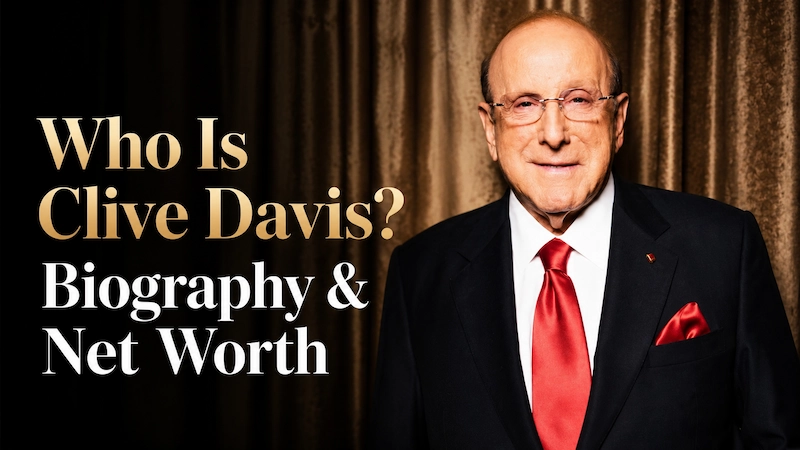
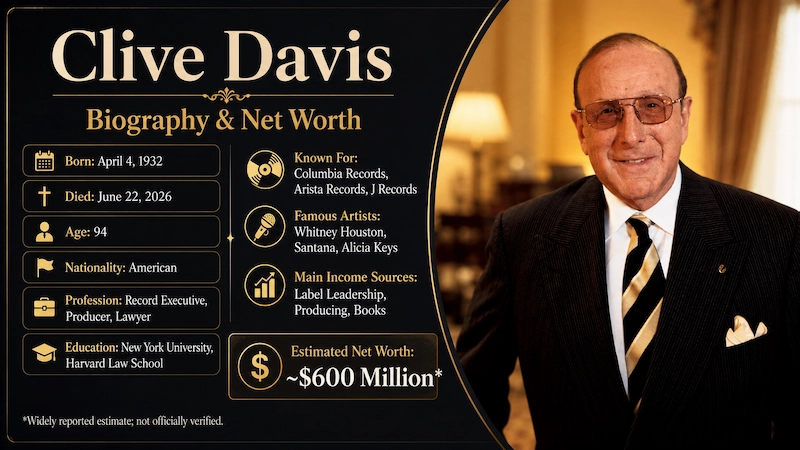
Who Is Clive Davis is a question that leads straight into the history of modern popular music. Clive Davis was an American record executive, producer, lawyer, label founder and talent scout whose decisions shaped the careers of Whitney Houston, Janis Joplin, Barry Manilow, Alicia Keys, Santana, Bruce Springsteen, Aretha Franklin, Rod Stewart and many others.
After his death on June 22, 2026, at age 94, public interest in Clive Davis Biography, Clive Davis Age, Clive Davis Net Worth, Clive Davis Career, Clive Davis Family and Clive Davis Income Sources grew again because his life was not just a business story. It was a story about taste, risk, reinvention and the rare ability to hear what the public might love before the public knew it.
Quick Facts
| Category | Details |
|---|---|
| Full Name | Clive Jay Davis |
| Popular Name | Clive Davis |
| Date of Birth | April 4, 1932 |
| Age | 94 at the time of death |
| Birthplace | Brooklyn, New York, United States |
| Nationality | American |
| Date of Death | June 22, 2026 |
| Place of Death | Manhattan, New York, United States |
| Profession | Record executive, producer, A&R executive, lawyer, author |
| Education | New York University; Harvard Law School |
| Marital Status | Married and divorced twice |
| Spouse or Partner | Helen Cohen, Janet Adelberg, and later partner Greg Schriefer |
| Children | Four children: Fred, Lauren, Mitchell, and Doug |
| Known For | Columbia Records, Arista Records, J Records, Whitney Houston, Santana’s Supernatural, Grammy pre-party |
| Last Known Residence | Manhattan, New York, United States |
| Estimated Net Worth | Celebrity Net Worth reported about $600 million at the time of death, but the figure is not officially verified (Not publicly confirmed) |
| Main Income Sources | Record label leadership, executive compensation, producer credits, label ventures, books, media projects, and reported assets |
| Active Years | 1960–2026 |
| Official Website | clivedavis.com |
| Official Social Media Profiles | Instagram: @clivejdavis; Facebook: Clive Davis official page |
These details reveal why Davis remained such a sought-after public figure. He was not a performer, yet his influence reached deep into the careers of performers who sold millions of records. His public identity was built around executive instinct: the “ear,” the dealmaking, the artist development, and the ability to recover after professional setbacks.
Official Sources
- Official Clive Davis Website
- Official Clive Davis Biography
- Clive Davis Grammy Profile
- Clive Davis Rock & Roll Hall of Fame Profile
Early Life and Background
Clive Jay Davis was born on April 4, 1932, in Brooklyn, New York. He grew up in Crown Heights in a middle-class Jewish family. His father worked as an electrician and salesman, and Davis’s early years were shaped less by music than by discipline, education, and survival. His story took a painful turn when both of his parents died while he was still young. That loss pushed him into adulthood early.
| Early Life Detail | Information |
|---|---|
| Birth Name | Clive Jay Davis |
| Birthplace | Brooklyn, New York |
| Childhood Neighborhood | Crown Heights, Brooklyn |
| Family Background | Jewish family; father worked as an electrician and salesman |
| Early Challenge | Lost both parents as a teenager |
| Early Interest in Music | Public sources say he was not deeply musical as a child |
There is a certain irony in Davis’s background. He did not grow up as the kid obsessed with collecting records or sneaking into jazz clubs. His first language was not melody. It was ambition, law, argument, and structure. That may be why his later career felt different from that of many music insiders. He approached songs with emotion, but he approached the business with a lawyer’s discipline.
Education
Education was one of the foundations of Clive Davis’s rise. He attended New York University, where he studied political science and graduated with strong academic honors. He later earned a law degree from Harvard Law School in 1956. That training gave him a serious advantage when he entered the corporate side of the record business.
| Institution | Field / Qualification | Notes |
|---|---|---|
| New York University | Political Science | Graduated in 1953 |
| Harvard Law School | Law Degree | Graduated in 1956 |
| Professional Training | Corporate law and entertainment contracts | Developed through early legal work |
Davis’s education did not teach him how to produce a hit record. It taught him how contracts worked, how organizations made decisions, and how power moved inside a corporation. Those lessons mattered. When he joined Columbia Records, he was not hired as a music visionary. He was hired as a lawyer. The music vision came later, and when it did, it changed his life.
Career Journey
Clive Davis started his professional life in law before entering Columbia Records in 1960. He rose quickly through the company and became president of Columbia Records in 1967. That year became one of the turning points of his career. After attending the Monterey Pop Festival, Davis saw the commercial and cultural force of rock music in a new way. He signed Janis Joplin’s Big Brother and the Holding Company and began building a roster that helped bring Columbia into a new era.
| Year / Period | Career Moment |
|---|---|
| 1960 | Joined Columbia Records as a lawyer |
| 1967 | Became president of Columbia Records |
| 1967 | Attended the Monterey Pop Festival and signed with Janis Joplin’s band |
| 1973 | Left Columbia after a disputed corporate fallout |
| 1974 | Founded Arista Records |
| 1983 | Signed Whitney Houston to Arista |
| 1989 | Helped launch LaFace Records with L.A. Reid and Babyface |
| 1994 | Entered into a joint venture with Sean “Puffy” Combs for Bad Boy Records |
| 2000 | Left Arista and founded J Records |
| 2008 | Became Chief Creative Officer of Sony Music Entertainment |
| 2026 | Died after more than six decades in music |
The dramatic part of the Clive Davis Career story is not simply that he succeeded. It is that he recovered. Leaving Colombia in 1973 could have ended his run as a power player. Instead, Arista Records became his second act, and arguably the chapter that made him a legend. Barry Manilow, Patti Smith, Whitney Houston, Kenny G, Sarah McLachlan, Monica, and others became part of the Arista story.
Watching his career unfold, it is hard not to notice how often Davis found opportunity in moments other executives might have treated as risk. He backed rock when older record executives were still cautious about it. He guided crossover pop when genre boundaries were more rigid. He understood that the right singer, the right song, and the right marketing push could move culture.
Major Achievements
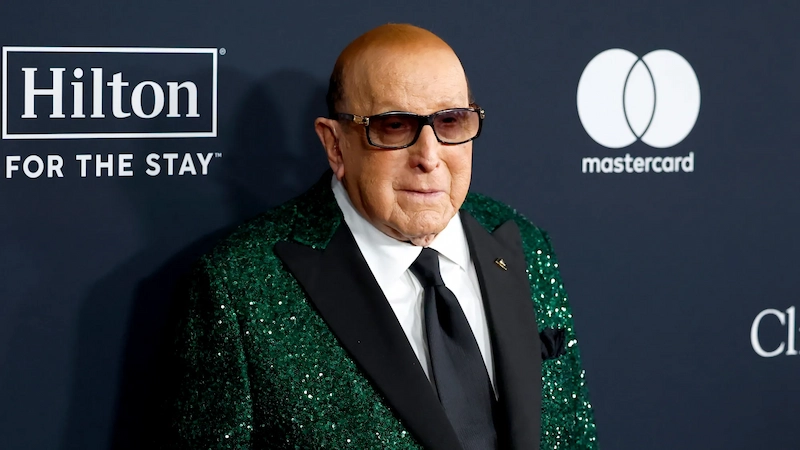
Clive Davis’s achievements stretch across labels, genres, and generations. He was inducted into the Rock & Roll Hall of Fame in 2000 under the Ahmet Ertegun Award category. He also received major recognition from the Recording Academy and was associated with several Grammy-winning projects.
| Achievement | Why It Matters |
|---|---|
| Rock & Roll Hall of Fame Induction | Recognized his influence as a non-performing music executive |
| Grammy Recognition | Connected to major Grammy-winning recordings and lifetime music honors |
| Founder of Arista Records | Built one of the defining labels of late 20th-century pop and R&B |
| Founder of J Records | Launched another successful label after leaving Arista |
| Whitney Houston’s Career | Helped introduce and guide one of the most successful vocalists in pop history |
| Santana’s Supernatural | Helped revive Santana’s mainstream career with a major commercial and Grammy-winning album |
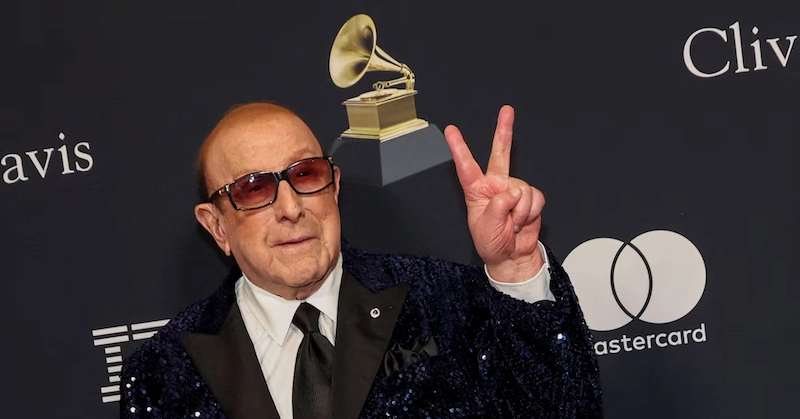
| Grammy Pre-Party | Turned an industry gathering into one of music’s most famous annual events |
Davis’s reputation was built on more than signing stars. He had a producer’s confidence, an executive’s patience, and a promoter’s sense of occasion. His annual pre-Grammy gala became almost a symbol of his status. Artists, executives, politicians, and actors came because Davis represented a certain old-school music power: personal, polished, and highly selective.
Businesses, Investments, and Income Sources
Clive Davis made money mainly in the music industry, but his income came from more than one job title. He worked as an executive, label founder, producer, author, and media figure. Exact salary details throughout his career are not fully public, so any financial profile has to be handled with caution.
| Income Source | Public Status |
|---|---|
| Record executive compensation | Publicly tied to his senior roles, but the exact figures are not fully disclosed. |
| Arista Records leadership | Major career income source |
| J Records | Major later-career label venture |
| Producer and executive producer credits | Publicly documented across several major projects |
| Books | Author of Clive: Inside the Record Business and The Soundtrack of My Life |
| Media and documentary projects | Connected to Clive Davis: The Soundtrack of Our Lives |
| Real estate and art holdings | Reported by online wealth sources, but not officially verified (Not publicly confirmed) |
| Speaking, appearances, and industry events | Likely income source, but exact figures are not publicly confirmed (Not publicly confirmed) |
The most important Clive Davis Income Sources were almost certainly tied to executive roles and label economics. He was not a touring artist or a streaming-era influencer. His wealth came from the top of the music business: label leadership, artist development, corporate deals, producer involvement, and long-term cultural value attached to his name.
Net Worth Analysis
Several online sources have reported large estimates of Clive Davis’ net worth, but the exact figure has not been publicly confirmed. Celebrity Net Worth reported his net worth at about $600 million at the time of his death, while older online estimates sometimes cited higher figures. Because Davis’s assets, contracts, royalties, private holdings, and estate details were not fully public, these numbers should be treated as estimates, not verified financial filings.
| Net Worth Category | Analysis |
|---|---|
| Commonly Reported Estimate | Around $600 million from Celebrity Net Worth, not officially verified (Not publicly confirmed) |
| Older Online Estimates | Around $850 million in some sources, not officially verified (Not publicly confirmed) |
| Core Wealth Driver | Decades of executive leadership in major record companies |
| Business Assets | Label ventures and music-related corporate roles |
| Creative Assets | Producer credits, books, and documentary-related value |
| Real Estate / Art | Reported by online sources, not officially verified (Not publicly confirmed) |
| Estate Value | No reliable public estate filing found (Not publicly confirmed) |
Davis’s wealth profile is unusual because so much of his value came from decision-making rather than visible ownership. He was the person behind the careers, the contracts, and the label systems. Publicly available information suggests his fortune was built through a long sequence of high-ranking corporate roles and business ventures rather than one single sale or one headline-making stock windfall.
The uncertainty around the number matters. Music executives often earn through complicated packages: salary, bonuses, equity-like arrangements, producer participation, consulting agreements, royalties, and long-term contracts. Without official estate documents or complete financial disclosures, any exact number should be read with caution.
Personal Life
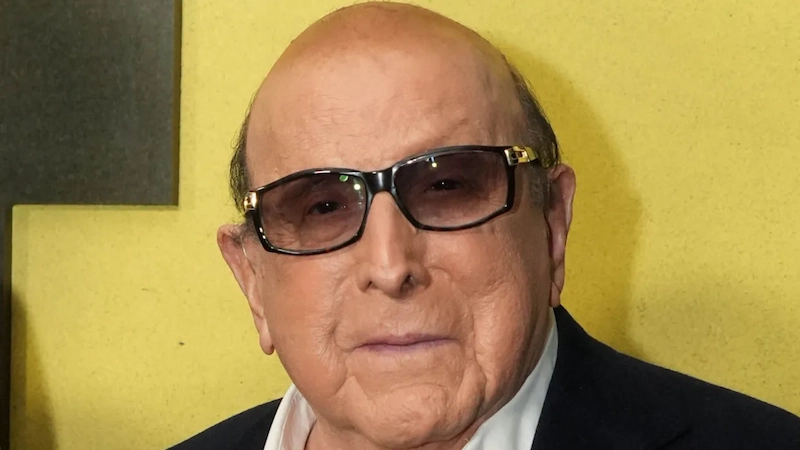
Clive Davis was married twice. His first marriage was to Helen Cohen, and his second was to Janet Adelberg. Both marriages ended in divorce. He had four children: Fred, Lauren, Mitchell, and Doug. In later years, public reports identified Greg Schriefer as his partner.
| Personal Detail | Information |
|---|---|
| First Spouse | Helen Cohen |
| Second Spouse | Janet Adelberg |
| Later Partner | Greg Schriefer |
| Children | Fred, Lauren, Mitchell, and Doug |
| Grandchildren | Eight grandchildren publicly reported |
| Great-Grandchildren | Two great-grandchildren publicly reported |
| Publicly Shared Identity | Davis wrote in his memoir that he was bisexual |
Davis’s personal life became more publicly discussed after his 2013 memoir, The Soundtrack of My Life. Still, he was not a celebrity in the tabloid sense. His public persona was more controlled: the tailored suit, the executive table, the artist showcase, the carefully chosen song. There was a sense that he wanted the music to be public and the private life to remain dignified.
Public Image and Influence
Clive Davis was widely seen as one of the most powerful record executives in American music history. Admirers viewed him as a rare executive who could hear commercial possibility without flattening an artist’s identity. Critics sometimes questioned whether his hands-on style could become too controlling. Both views can be true.
His career included controversy. His departure from Columbia in 1973 came after allegations of financial misconduct, which he denied. Later reporting also noted a tax-related legal issue. Yet Davis’s comeback was so strong that the scandal did not define his career. In many ways, he became a model of the second act: wounded, then restored, then even more influential.
His influence reached across rock, R&B, pop, adult contemporary, country, and hip-hop. That range is why people still search for him. Davis was not tied to one sound. He was tied to the machinery that helped turn sound into a career.
Social Media Presence
Clive Davis was not a social media-native personality, but his official digital presence helped preserve his brand, promote his memoir and documentary, and connect later audiences with his legacy.
| Platform | Profile / Presence |
|---|---|
| Official Website | clivedavis.com |
| @clivejdavis | |
| Official Clive Davis page | |
| YouTube / Video Presence | Interviews, Grammy-related clips, and documentary materials appear across official media platforms. |
| IMDb | Listed for documentary and entertainment credits |
Social media did not create Davis’s fame. His authority came from boardrooms, studios, and stages. But online profiles helped younger listeners understand why one executive’s name kept appearing beside so many major artists.
Interesting Facts About Clive Davis
- Clive Davis began his music career as a lawyer, not as a producer or musician.
- He became president of Columbia Records in 1967.
- The Monterey Pop Festival helped change how he understood rock music.
- He signed or guided artists across several generations, from Janis Joplin to Alicia Keys.
- He founded Arista Records in 1974.
- He signed Whitney Houston to Arista in 1983.
- He helped shape Santana’s 1999 comeback album, Supernatural.
- He was inducted into the Rock & Roll Hall of Fame in 2000.
- His annual pre-Grammy gala became one of the most famous private events in music.
- His memoir, The Soundtrack of My Life, became a major source for understanding his personal and professional story.
Future Plans and What Comes Next
Because Clive Davis died in 2026, the future of his story now belongs to his estate, archives, artists, institutions, and the music business he helped shape. The Clive Davis Institute of Recorded Music at NYU remains one of the most visible parts of his educational legacy. His official website, interviews, memoir, and documentary will likely continue to serve as reference points for future music executives and fans.
There may also be renewed interest in documentaries, tribute events, unreleased interviews, and deeper reporting on his business methods. The challenge ahead is not whether Davis will be remembered. He will. The more interesting question is how future generations will interpret his style of music leadership in an industry now ruled by streaming data, social media metrics, and algorithmic discovery.
FAQs
Who is Clive Davis?
Clive Davis was an American record executive, producer, lawyer, and label founder known for shaping the careers of Whitney Houston, Janis Joplin, Santana, Alicia Keys, and many others.
What is Clive Davis known for?
He is known for leading Columbia Records, founding Arista Records and J Records, discovering or guiding major artists, and becoming one of the most influential executives in music history.
What was Clive Davis’s net worth?
Celebrity Net Worth reported Clive Davis’s net worth at around $600 million at the time of his death, but the figure is not officially verified (Not publicly confirmed).
How did Clive Davis make money?
He made money through record-label leadership, executive roles, producer credits, business ventures, books, media projects, and reportedly private assets.
How old was Clive Davis?
Clive Davis was 94 years old when he died on June 22, 2026.
Was Clive Davis married?
Yes. Clive Davis was married twice, first to Helen Cohen and later to Janet Adelberg. Both marriages ended in divorce.
Did Clive Davis have children?
Yes. He had four children: Fred, Lauren, Mitchell, and Doug.
Where was Clive Davis now?
Clive Davis died in Manhattan, New York, on June 22, 2026. His legacy remains active through his music catalog, official archives, NYU’s Clive Davis Institute, and the artists he helped shape.
The Lasting Legacy of Clive Davis
Clive Davis’s story is not only about money, awards, or famous names. It is about judgment. He had the kind of career that made people ask how much of music success is instinct and how much is strategy. Davis seemed to believe it was both. He listened for emotion, then built the business structure around it.
His legacy is complicated, as powerful careers often are. There were controversies, sharp decisions, and moments when artists and executives did not always agree with him. But there was also an extraordinary record of discovery and reinvention. He helped singers become stars, helped older stars find new chapters, and helped labels understand that music could cross race, genre, and generation when handled with confidence.
That is why people continue to search for Clive Davis. They are not only looking for a name from the credits. They are looking for the person behind some of the most familiar voices in modern music. In the end, Davis became what few executives ever become, part of the story listeners tell about the songs themselves.